
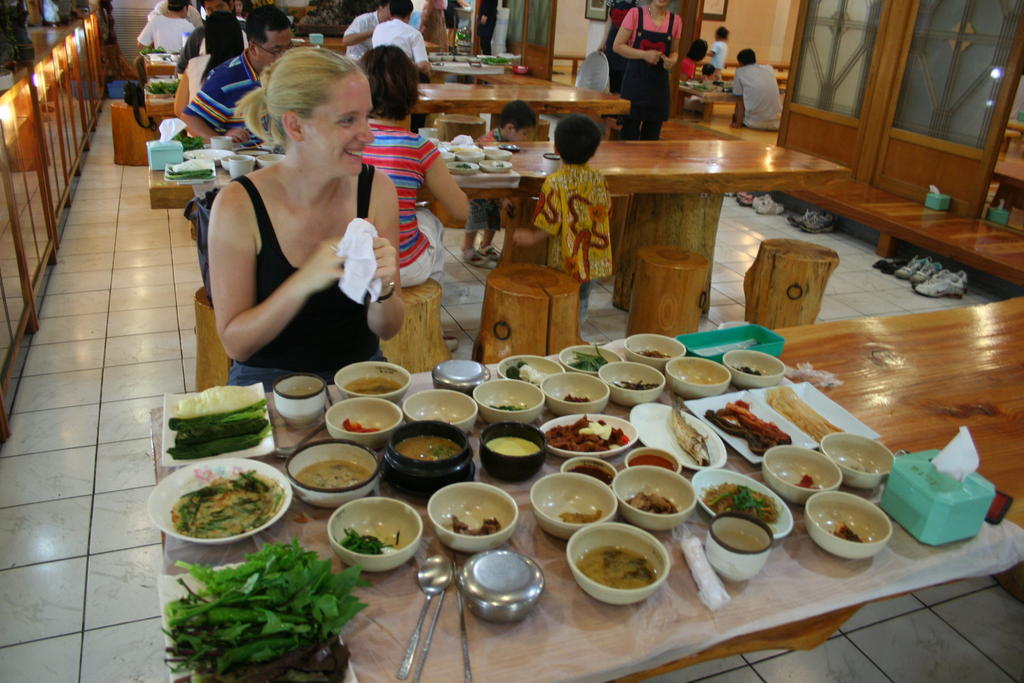
 We had been exploring Gyeongju all afternoon and had started to get hungry. It looked like it was going to be a lovely sunset so we decided to get a quick meal and come back out to watch. So we walked straght into the first restaurant we found, and sat down. No menu was offered, and within a minute a huge array of small dishes began arrving at our table, unloaded from several very large trays. We were, as you might expect, a bit bemused by this and couldn't begin to fathom where we might start. We fished out the Lonely Planet and think what we'd been presented with was 'Hanjeogsik' - "a banquet that includes fish, meat, soup, tofu stew, rice, noodles, steamed egg, shellfish and lots of cold vegetables amongst many other items". It was entertaining to pick through and discover what was what, but with over thirty dishes to go at we were stuffed well before the end....
Saturday, August 27, 2005
10:14 AM - Hanjeogsik? - Steve
We had been exploring Gyeongju all afternoon and had started to get hungry. It looked like it was going to be a lovely sunset so we decided to get a quick meal and come back out to watch. So we walked straght into the first restaurant we found, and sat down. No menu was offered, and within a minute a huge array of small dishes began arrving at our table, unloaded from several very large trays. We were, as you might expect, a bit bemused by this and couldn't begin to fathom where we might start. We fished out the Lonely Planet and think what we'd been presented with was 'Hanjeogsik' - "a banquet that includes fish, meat, soup, tofu stew, rice, noodles, steamed egg, shellfish and lots of cold vegetables amongst many other items". It was entertaining to pick through and discover what was what, but with over thirty dishes to go at we were stuffed well before the end....
© Steve + Rachel 2005 - Powered for Blogger by Blogger Templates